
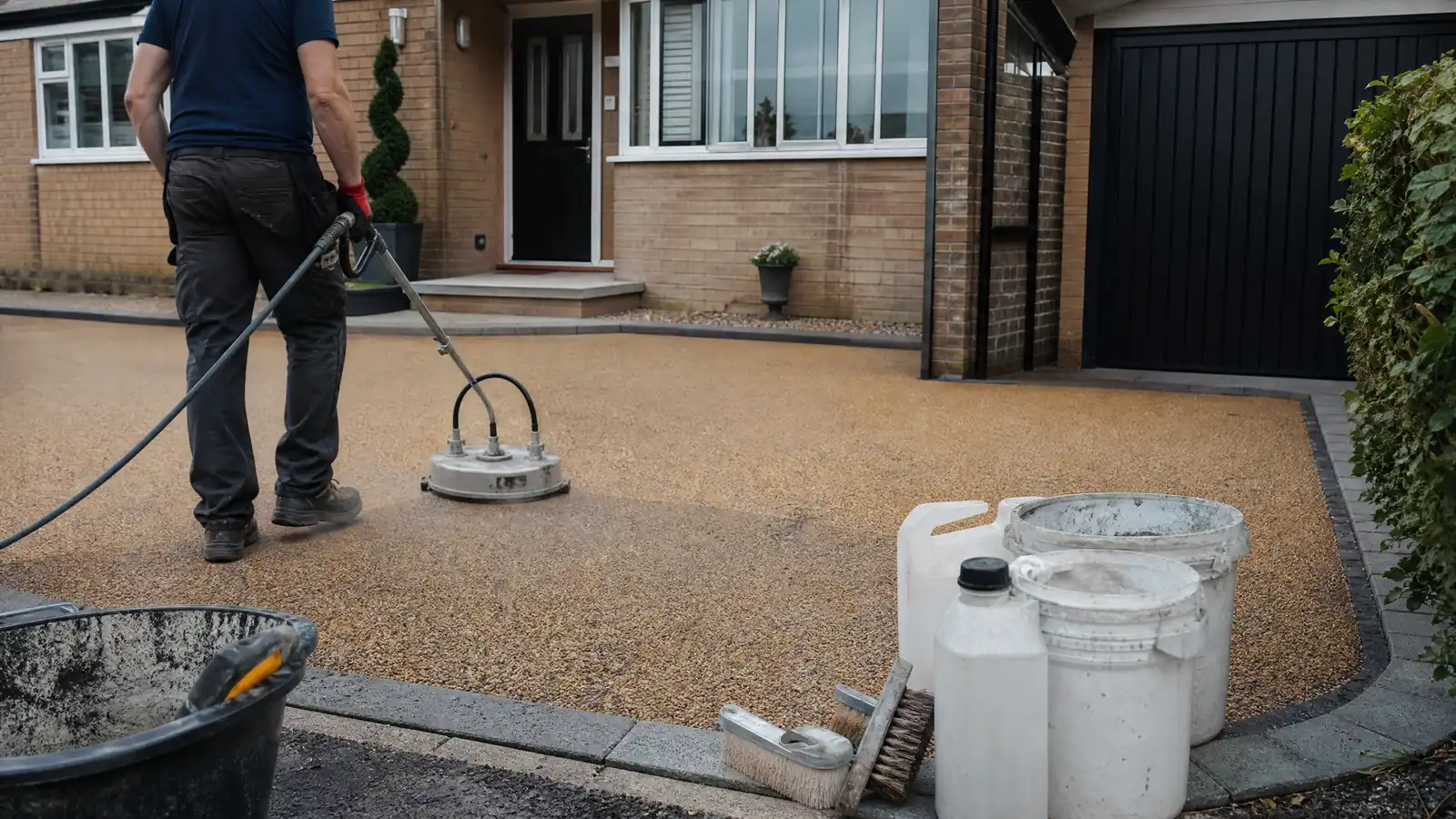
How to Clean a Resin Driveway in Kettering – Keep It Looking Fresh
Learn how to clean a resin driveway and keep it looking sharp, from stains to moss. A practical guide from our Resin Driveway Repairs & Cleaning team.
If you’re wondering how to clean a resin driveway without damaging it, the good news is that it’s far easier than looking after gravel or block paving. At Eco Resin Driveways, we’re often asked what upkeep a new surface needs, and the honest answer is a soft brush, a hose and a little regular attention. Get the routine right and a drive laid on a sound base should last 15-25 years (BestBuilders resin driveway cost guide, updated 22 August 2026). Call 01536 580137 if you’d like us to look at yours.
What does a resin driveway need week to week?
A resin driveway needs sweeping with a soft broom every week or two, and a rinse with a hose when it looks dusty. Because the surface is porous, rainwater drains through it, so dirt tends to sit on top. Regular sweeping stops that dirt turning into a film that algae can grip.
Keep an eye out for these:
- Leaves and seed pods. Wet leaves can leave tannin stains, especially on light stone mixes. Sweep them off promptly in autumn.
- Soil washed from borders. Many Kettering gardens sit on clay, which turns to sticky mud and leaves marks if it’s tracked or washed over the drive.
- Overhanging trees. Sap and bird droppings are easiest to shift while still fresh.
A permeable build also helps you stay within permitted development for a front drive (Planning Portal, Paving your front garden, 2026). Don’t let silt block the surface and undo that benefit.
How do you get rid of moss, algae and stubborn stains?
For moss and green algae, scrub with warm water and a mild detergent, then rinse well. A soft-bristled brush does the job on most marks. Avoid solvents, acids and harsh bleach, as these can dull the resin or damage the binder holding the stones together.
Common problems and what works:
- Moss and algae: These show up in shaded spots, such as the side of a house or under a tree. Treat them early and they come off with a brush. Left for a season or two, they take more effort.
- Oil and fuel drips: Soak up the excess with kitchen roll or cat litter, then wash with washing-up liquid and warm water. Act quickly, because oil is harder to lift once it has soaked in.
- Tyre marks: Usually fade with a scrub and a bit of patience.
- Chewing gum: Harden it with an ice pack, then lift it off gently.
Weeds are rarely an issue on a properly laid resin drive, but seeds blown onto the surface can take root in a thin layer of dirt. Pull them out by hand and sweep the spot clean.
Is it safe to jet wash resin?
Yes, a pressure washer is safe if you use it gently. Use a wide fan nozzle, keep the lance well back and keep it moving. Blasting at close range can lift stones out of the surface. Never aim directly at joints, edges or any area where the surface already looks worn.
Hiring a professional is an option if you’d rather not take the risk. Jet washing a resin drive typically costs £80-£200, usually once a year (MyJobQuote resin driveway cost guide, updated 6 October 2026). Prices vary between firms, so it’s worth comparing a couple of quotes.
If you’ve just had a new drive laid, wait before cleaning it. Resin is safe to walk on after 4-6 hours and ready for vehicles in 24-48 hours, depending on temperature (BestBuilders, updated 22 August 2026). Your installer should tell you when the surface is fully cured and ready for its first wash.
How can you keep the colour from fading or yellowing?
Choosing a UV-stable resin at the outset is the best protection. Upgrading costs an extra £5-£12 per m², and UV-stable clear resin stops yellowing (BestBuilders, updated 22 August 2026). On a 40 m² drive that is a modest sum against years of keeping the stone colours true.
Day-to-day habits help too. Wash off salt and grit in winter, and avoid dragging heavy items across the surface. The base matters just as much, since a drive on poor foundations will crack however well you clean it. Ground around Kettering ranges from ironstone to clay (Rutland Driveways, Resin driveways in Kettering, October 2026), so we always check what’s underneath before we quote. If a drive is already cracked or sunken, cleaning won’t fix it. Our resin driveway repairs and cleaning service covers patching, re-sealing and honest advice on whether the surface can be saved.
Key takeaways
- Sweep regularly and rinse with a hose to stop dirt building up.
- Use warm water, mild detergent and a soft brush for moss, algae and stains.
- Jet wash gently with a wide nozzle held well back, or hire a professional for £80-£200 (MyJobQuote, updated 6 October 2026).
- Choose UV-stable resin to prevent yellowing.
- Cracks and sinking point to a base problem, not a cleaning problem.
Next step
If your drive is stained, patchy or starting to crack, Get a Free Quote and we’ll survey it for free, or call 01536 580137.


Frequently Asked Questions
Sweep every week or two and give it a proper wash once or twice a year. Shaded drives or those under trees may need extra attention in autumn. A yearly jet wash typically costs £80-£200 if you hire someone (MyJobQuote, updated 6 October 2026).
It's best not to. Strong chemicals can discolour the resin or weaken the binder. A mild detergent and soft brush deal with most algae, moss and stains. If weeds appear, pull them out by hand and sweep away the dirt they rooted in.
Cleaning won't cure cracks, which usually come from a weak base or movement underneath. Have it checked before the damage spreads. We'll tell you honestly whether a repair will do the job or whether the surface needs replacing.
Get a Fixed Price for Your Resin Driveway
Tell us roughly how big the drive is and what is there now. We visit, bring colour samples, check the base and give you a written price.